Making Baozi
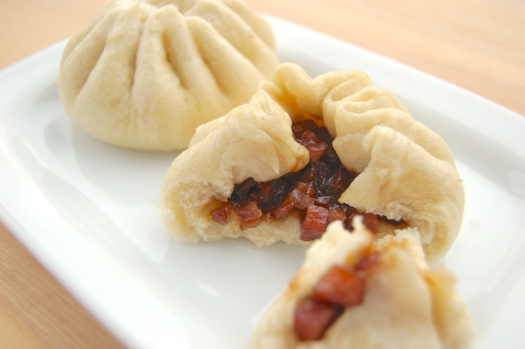
Two leaveners give baozi a cloud-like fluff that’s a perfect compliment to a sweet barbecue (or bean paste, or custard) interior. Sampling one straight from the steamer you could almost convince yourself that you’re eating some form of savory cotton candy. Such is the magic of steam baking. What you lose in color and crisp you gain in other-worldy lightness.
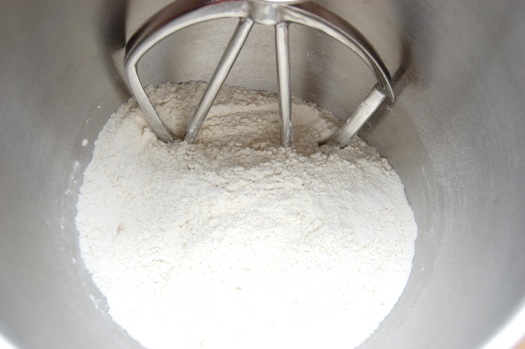
I confess that boazi intimidated me a little at first, I was worried about the shaping step. But a decent top crimp is well within the grasp of the average baker. And heck, if it fails you can just pinch it closed and steam the buns upside down instead. No shame there. They taste just as good. Start by preparing the filling of your choice and assembling your ingredients. Combine the dry ingredients in a bowl (or the bowl of a mixer fitted with the paddle). Stir them together.
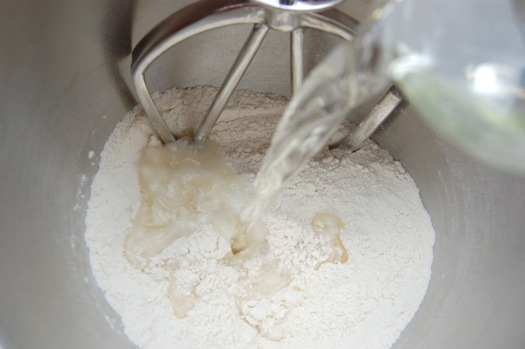
Add the wet ingredients and stir on medium until a shaggy dough starts to come together.
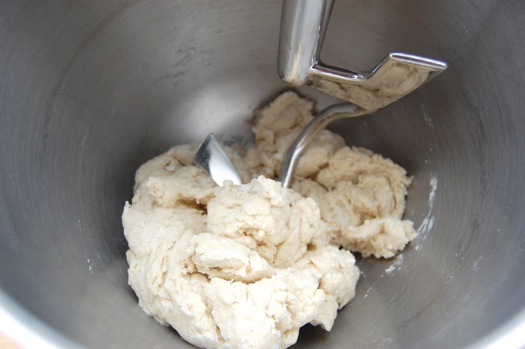
Like so. Switch to the dough hook and knead for five minutes.
Transfer the dough to a lightly oiled bowl, cover it with a cloth and let it rise for 90 minutes.
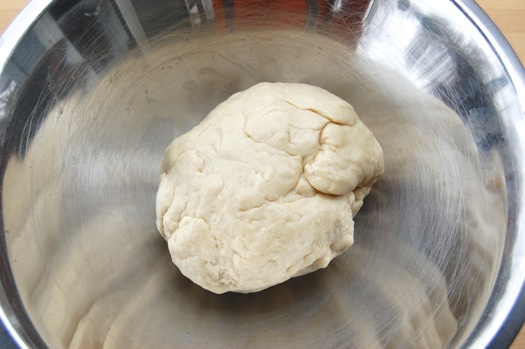
At which point it will look about like this:
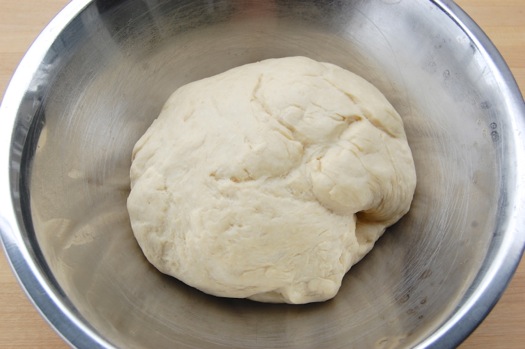
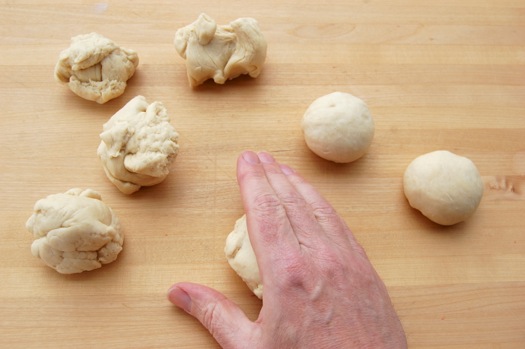
Divide the dough into 12 roughly two-ounce pieces. Shape those into balls by rolling them like so. If they’re not perfectly round do not sweat it.
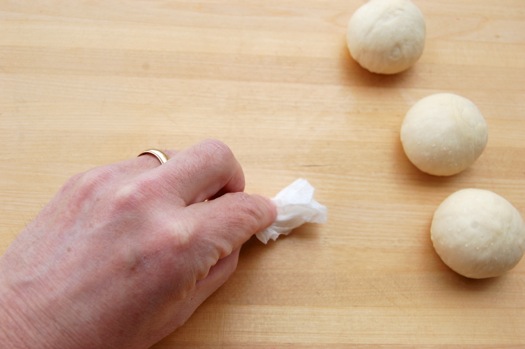
Since the balls are a little slippery, you’ll probably need to wet your work surface so you generate the right sort of friction. Here I’m wiping the board with a wet paper towel. It makes a big difference.
Once all the dough is rolled it’s time for the shaping. There’s only one trick to rolling boazi dough, which I’ll show you in a moment. For now, focus on rolling the dough out into circles. Starting with the first ball you made apply it to a lightly floured board and get busy with the pin.
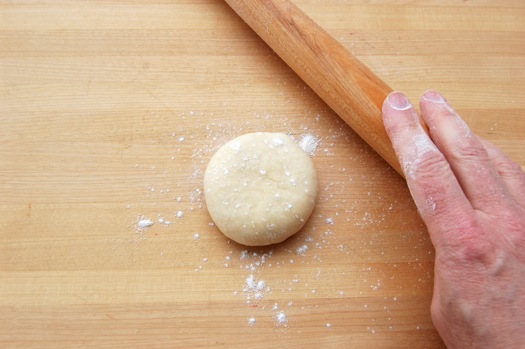
Give it a few rolls, then a quarter turn and roll some more. Depending on the nature of the gluten in your flour, the dough may snap back some. Just keep rolling.
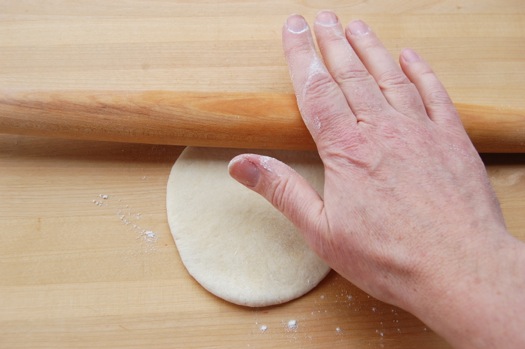
Now for the one trick. A good circle of boazi dough is thinner at the edges than it is in the middle. This very thin outer edge make the crimp easier to execute. It also makes the crimp prettier. So starting about an inch from the edge, roll out ward, pressing hard. The dough might smear a little under the pressure, that’s OK.
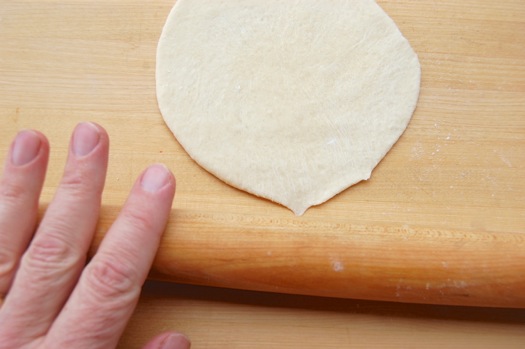
Rotate the dough slightly, roll outward. Rotate a little more, roll outward. Trust me, it gets faster and more natural after a bao or two. Once it’s rolled, apply about a tablespoon of filling to the center.
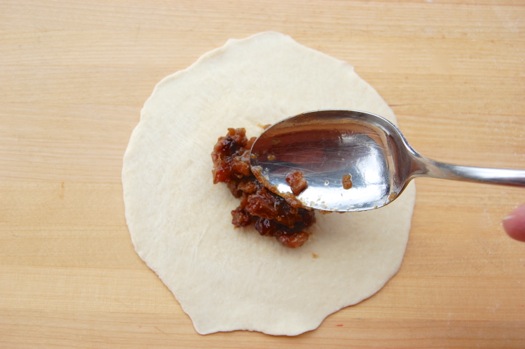
I wish I’d had a helper to photograph both of my hands for the crimp. Basically you want to pinch the dough, gather up a little, pinch it, gather a little more, etc. The motion is quite simple. This video goes a great job of showing it. This same crimp comes very handy for lots of other pocket pies, like pasties and empanadas.
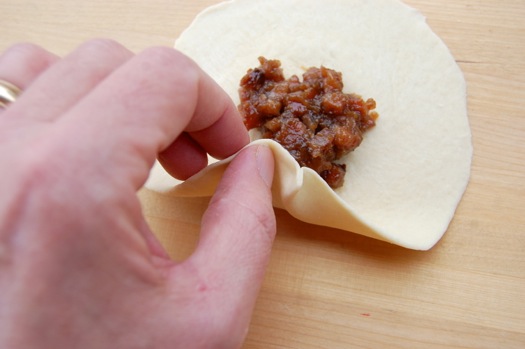
Work your way around, pinching firmly so the bao doesn’t open during steaming…
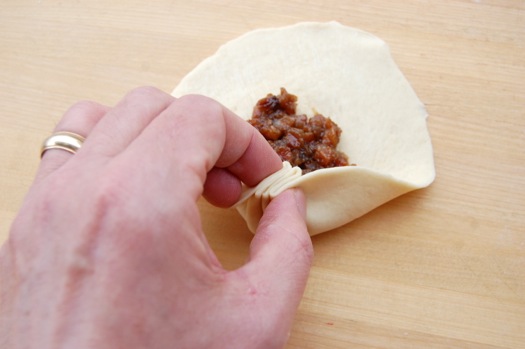
…tum tee tum…
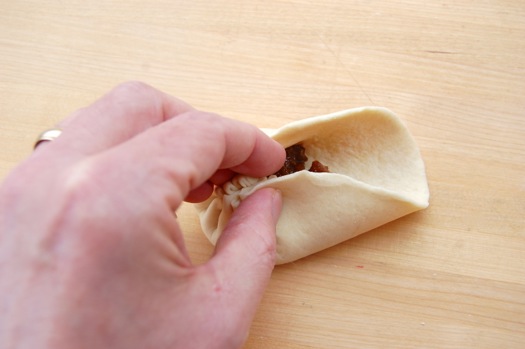
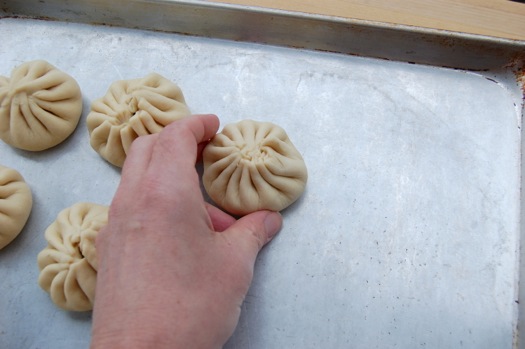
…until you’ve got something like this. Kinda cute, right? This was my last and best one.
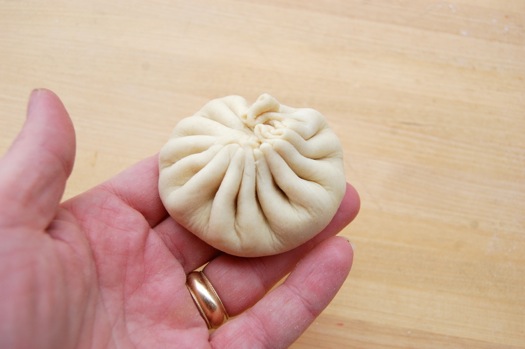
The others weren’t terrible, but not exactly world class either. Hey, these things take practice, am I right? Let these proof for half an hour.
Place each on a small square of parchment paper to keep them from sticking, and put them in a steaming device of some sort. This Chinese steamer I bought for $12.95. I’ll get plenty of use out of it because these buns amazed Mrs. Pastry. Give them plenty of room. Four would have been better here since they increase in size by about 100%.
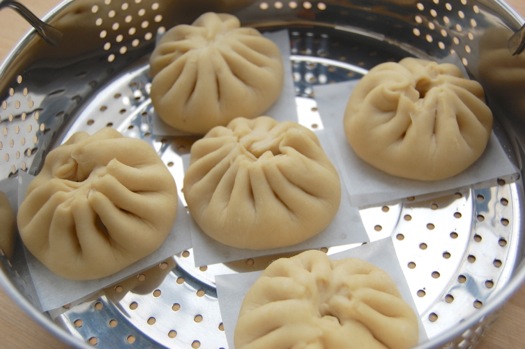
Steam them for 20 minutes until they’re extremely plump. Serve them warm, straight from the steamer and get ready for the oohs and ahhs.
Have you read Andrea Nguyen’s book Asian Dumplings? It’s a great thing.
I have not! Sounds like I need to get it!
– Joe
I can also vouch for Andrea Nguyen’s book(s), especially the e-versions, which have excellent videos that demonstrate the less familiar techniques.
I made these last night using Sally’s recipe for fill. I don’t want to have you think they were any good but I may never eat anything else again!
Thanks to Sally for sharing and thanks to you for keeping the doors open on this spiffy little shop where we can share and learn.
Try frying after you steam it, but usually people do it for the plain (without filling) version
I’d add in Charmaine Solomons “The Complete Asian Cookbook” for more ideas as well.
Nothing like steamed buns with blackberry jam filling, and a side dish of chantilly creme
So Tht’s how you get that pretty shape on top! I’d been doing a much more simple pull-and-press closure on top and wondered why mine never looked like the ones in cartoons.
After pinching the top, then twist it a little
That’s a good tip, Wisnu. Thank you!
– Joe
Wow Bao I am so happy to see this recipe on your site. Here we are visiting Chicago and had Bao for lunch today and loved them. Can’t wait to try them out when we get home.
Let me know what you think, Bev!
– Joe
Back home now and I had my first attempt at making Baozi yesterday. Whilst they did not look all that pretty the texture and taste were great. I did not have my dough to filling ratio quite right, too much dough so guess I will have to make some more 🙂
Dang! Another batch! Well, sometimes you’ve just got to suck it up and do it, ya know?
Let me know how they go!
– Joe
I made these last week with an adzuki bean paste filling, and they were completely wonderful, despite some technical difficulties with crimping and a less-than-optimal steamer. They tasted great, though, and were gone in about a day and a half.
Trying again today with some more bean paste, and also trying a play on a cornish pasty with a sort of pot-roast filling. I have high hopes.
Thanks for this recipe! Love your blog; it’s a fantastic reference for an amateur baker with big ideas but little technical expertise (namely, me).
Woohoo! Great news, Gillian! Thanks for checking in, I’m so glad the recipe worked so well for you!
– Joe
I’m always looking for make-ahead recipes for my kids lunches that are relatively easy to heat and eat. How would these hold up during freezing and reheating? Is that blasphemous somehow?
Hey Stepahanie!
Honestly these get a little dense and gummy when they’re served cold. Knishes, on the other hand, are fabulous make-ahead lunches. Ever tried those?
– Joe
I know you said the filling in yours were pork, but every time I looked at the mouthwatering photo, what I saw was “chopped apples and raisins in a brown sugar and cinnamon glaze.” So, realizing that that is what I crave, I made a batch that way. Came out very tasty.
I precooked the filling in the microwave on the “fresh vegetable” setting. Also, my steamer consisted of a big casserole with an inch of water in it, and the lid of a small casserole upside down inside it, and the big casserole’s domed lid over. The little casserole’s lid made a nice steaming platform. So, realizing that now I have a steamer, I have been experimenting with steaming everything .
Your link to the “how to fold the wrappers” dumpling took me on a long wander around the internet and I discovered a lot of wonderful things that can go in my steamer. Puddings and cakes and dumplings and knoedels and on and on. Thank you for starting me off on the journey! Keep making me curious about stuff.
Wow…keep me updated on what you find, Sialia! I’ll be interested.
– Joe
I discovered three more fillings that work:
1. Sauteed diced mushrooms and onions with a little sweet chili paste and some salt & garlic.
2. Pureed hazelnuts and chocolate chips. Use just enough oil to make the blender work, a teeny pinch of salt, and then if the puree is a little too thin, add some powdered sugar to thicken it back up afterwards. Chill it until it gets solid enough to roll into a ball, then wrap each ball in the dough and steam. Eat while warm and melty inside. (Alternatively, just use cold Nutella)
3. Refried beans & cheese. Why not? Anything that would taste good hot & wrapped in a flour tortilla would taste good in this dough.
Also, the dough is much easier to handle if its been in the refrigerator for a bit. I made a batch earlier in the week, and have been using it one bun at a time all week. Sooooo good!