Malt Syrup
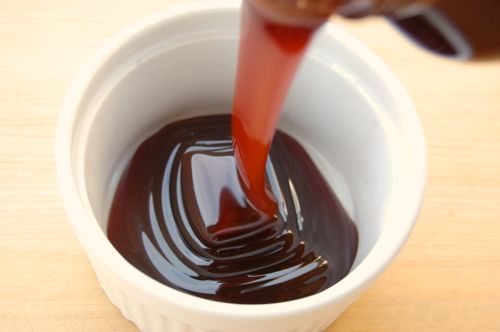
The Chinese have been making malt syrup for thousands of years. In fact up until the mass adoption of cane sugar, it rivaled honey for its popularity. The technique is pretty neat. It involves the “malting” — which is to say “sprouting” — of barley grain in pans of water. Once the seeds have germinated, the sprouts are dried and ground up to make a powder.
What’s the point of this? Simply that sprouted grain is rife with starch-digesting enzymes. It’s those enzymes that are responsible for disassembling the starch in the seed, which is the fuel that the sprout needs to grow. However those enzymes can be hijacked and put to other purposes…like breaking down rice or wheat starch. And that’s exactly what the Chinese did with it, creating sugar solutions out of mashed grain and malt powder that they’d boil down to thick syrups.
Malt syrup is similar to other sugar syrups in that it contains lots of glucose, maltose and other longer-chain sugars. It isn’t used all that much anymore, though bakers use it to spike their bread doughs with both sugar and enzymes.
I love this syrup series. I’ve never come across malt syrup – but I do love the taste of malt.
You’d find it interesting, then. It’s not something you’d make a pie out of, but it can be useful especially as I said in bread, bagel and pretzel making. The sugar and enzymes speed up browning.
– Joe
Is malt syrup similar to malt extract? My husband and I use malt extract to brew beer (rather than malting whole grains), and it looks very similar to your picture.
Great question, Jacki!
Malt extract is an all-barley (no rice or wheat) syrup, and as such it’s both stronger-tasting and denser in enzymes. It’s like malt syrup on steroids!
– Joe
You sure can brew with this stuff! It works great for a mixed method, where you brew with both malt extract and whole grains, since a lot of malt syrups (at least the ones I buy from health food shops) still have all of their enzymes intact.
I’ve had great results with it.
I have used wheat malt in several dishes (you can but it by the quart through brew supply places) and also in a spent grain bread I make with the barley/wheat leftovers when I brew. Mostly its just a trick to make a whole dinner around brewing for my own entertainment. The stuff is not very sweet so its not exactly like honey but it does have an interesting flavor profile
Its been a couple of years since I have done that but I could dig up my notes if anyone cares.
You have an interesting culinary sensibility, Frankly! 😉
Thanks!
– Joe
GREAT post Joe! It’s a very familiar syrup to us but I don’t think many of us know how it’s made! As kids, we would use a chopstick to ‘dig out’ some maltose syrup and sandwich it between two saltine crackers – a treat! It’s also an essential ingredient in making roast duck or goose. After blaching the skin with boiling water several times, the bird is brushed with a solution of vinegar and maltose syrup. I guess the thicker consistency of maltose syrup ‘holds on’ to the skin better than other sweeteners and contributes to crispiness and caramelisation during the roasting.
Wonderful story, Henry!
I did know that it’s an important ingredient in Pekin duck, where it works like a thick glaze, as you say.
Thanks for the terrific comment!
– Joe
Maltose syrup is also an essential ingredient in making Cantonese-style roast pork (char siu). After roasting, the pork is plunged into a light maltose syrup (mixed with some water of course, since it’s so thick) to give it a glossy sheen, viscosity, and sweetness. Here’re are my attempts haha:
http://sphotos-b.xx.fbcdn.net/hphotos-ash3/545816_10151224769248352_285309787_n.jpg
http://sphotos-b.xx.fbcdn.net/hphotos-ash4/485653_10151227091943352_893716075_n.jpg
I chopped up some of the char siu meat as the filling for the buns in the second pic.
Good stuff for brewing beer with, especially if you’re doing it from a kit!
I am loving this series too. I’ve got some jaggery ordered now. It just look so yummy!
Thanks Joe 🙂
My pleasure, Erin! And let me know what you think!
– Joe
I never attributed malt to the Chinese! The more you know 😀
I was surprised by that too. Sadly they didn’t lead the charge in beer brewing.
I am so enjoying this series. I hope you have sorghum syrup lined up for us. My father loves it, especially on biscuits.
I’ve used malt extract and syrup for beer brewing as well as bread baking (but I’d rather drink it han eat it). For bread baking I’ve been using malt powder — dehydrated malt syrup/extract. I assume that the syrup is about 80% water so I use about 20% of the powder in the bread dough. The powder keeps forever. I was having mold issues with storing syrup/extract.
So what’s the difference between diastatic and non diastatic malts?
Hey GL!
Diastatic malt has active enzymes in it. The enzymes in non-diastatic malt have been deactivated with heat.
– Joe
So…
1. Why use non diastatic malt instead of sugar?
2. When would you want to use diastatic malt and how is the result different from just sugar?
Hey again GL!
I’m not totally sure I understand your question but I’ll try to answer them anyway. 😉
Diastatic malt is usually sold in powdered form as a so-called “dough improver”. It’s not really sweet to the tongue, even though it contains a lot of sugars, many of them don’t taste sweet to our tongues. The enzymes it contains go to work on starch in bread dough, cutting it down into sugars yeast can use. In that way it really is similar to sugar, except that the enzymatic activity helps to brown bread crusts in a way that sugar doesn’t.
Does that answer your question?
– Joe
Joe,
Although I have access to large quantities of Diastatic Barley Malt Powder here where I live in Colombia (shipped in from Brazil), Barley Malt Syrup (or Non-Diastatic Barley Malt Powder) is completely unavailable. Would you be kind enough to detail how I might covert the Diastatic Powder to both Syrup and Non-Diastatic powder. I’m not getting the flavors I’m looking for in my bagels (originally from New York). Thanks so much… your blog is an (inter)national treasure!
You flatter me, Jim! But I’ll take it!
That’s a toughie. My understanding is that you can substitute malt power (diastatic or non-diastatic) for malt syrup in almost direct proportion by weight. If a recipe calls for 10 ounces of syrup, 8.5 ounces of malt powder plus 1.5 ounces of water should make a decent substitute.
Making the syrup itself would be a challenge. You can’t do it from the starting point of malt powder. You’d need to buy barley, sprout it, then slowly cook it with a small amount of water to extract the maltose, then strain it. And even then you wouldn’t have a product like commercial malt syrup since that stuff is spun in a centrifuge and evaporated under pressure. Are you sure you can’t order like, a barrel of the stuff commercially?
– Joe
Thanks for taking the time Joe. My supplier here says he had to stop importing syrup due to import delays which resulted in spoilage (who knows the real story). But when added to 3 cups of flour, the aftertaste from 2 Tablespoons of Diastatic Powder is nasty. And there’s STILL no malt flavor. So, what about simply toasting the powder I have? Could that do the trick? If so, any thoughts on time/temp?
Hey Jim!
Toasting the power would give you non-diastatic powder (the enzymes would all be deactivated) but I’m not sure how much more flavor. If you’re up for an experiment I’d try a low temperature of about 275 degrees Fahrenheit for 45 minutes or so. If that’s not enough, well, you know what to do!
Apparently there are a lot of brewers out there that make their own malt syrups by malting their own barley in water, heating the sprouted grain with a little water, then straining the mixture. I see no reason why that wouldn’t work, but you’d need to get invested in the process! Here are a few sources I’ve found:
http://www.ehow.com/how_10016120_make-malt-syrup.html
http://bisonrma.blogspot.com/2010/02/making-syrups.html
http://therealknowhow.com/2012/03/10/make-malt-sugarsyrup/
None of them are stellar, but if you’re up for something different! Since malt syrup is mostly sugar (like maltose) with some other residue in it, have you considered experimenting with molasses or another syrup? Maybe with some malt powder mixed in? Just a thought.
– Jim
Thanks Joe! You’re sweet as pie for responding so fast. I’ll experiment…
Let me know what you hit on, as I’ll be curious!
Cheers,
– Joe
Absolutely!
Joe,
As you predicted, toasting my “Malt Extract” Powder achieved Non-Diastatic Powder — but no discernible advantage in flavor. So, on a whim, I tried making Malt Syrup. And surprise surprise, it worked! But now I’m a bit baffled. This “Malt Extract” Powder I have must not be true Barley Malt powder. (It looks different that a bag of KA Non-Diastatic powder I have here — the KA is finer and doesn’t have sparkly crystals running through it). Anyway, since cooking it down with water and a few drops of vinegar did produce a usable Malt Syrup, I wondered if there’s a proper formula (% solid-to-liquid, time/temp, percentage of vinegar) for making syrup out of say, 10 pounds of this dry “Malt Extract” that I can indeed buy here in Colombia? Thanks again Joe!
Great fiddling, Jim! Way to go!
I personally have not come across any proportions for a syrup like that. I think you’ll just have to use your best judgement to get the consistency you want. Also make sure you store the finished product in the fridge if you intend to keep much of it around. Not knowing the water content it could ferment on you if you left it at room temperature.
Let me know how the bagels taste! Cheers,
– Joe